If your boiler needs repairs, there’s no question, waiting just makes it worse. After all, waiting for a small problem to turn into a bigger one just means downtime, and downtime means lost revenue. That’s why it’s important that you act on a failing component now. And, of course, it’s important to always use the correct part. Because if you don’t, you can end up making things worse by damaging your boiler, thus adding to your boiler’s downtime and costing your company money.
Many boiler repairs aren't delayed because the part is unavailable, they're delayed because the wrong part gets ordered. Guessing based on appearance, skipping the serial number, or assuming two components are interchangeable can add days or even weeks to a repair. That's why experienced technicians always verify part numbers, specifications, and compatibility before ordering replacement parts.
DON’T SIT ON IT
If you think a boiler component or part is starting to fail, don’t tempt fate. Get it checked by an expert or, if it’s a part you can replace yourself, replace it. If you wait until it totally fails, that could bring some serious consequences. If one part fails, it could lead to a cascade failure that causes other parts to be damaged as well. So what could have been a cheap replacement is now a series of other replacements, with a much bigger parts bill.
Replacing failing parts before they give up the ghost will also save downtime, because there’s just one part to replace. And as we all know, downtime is lost revenue. It’s better to have your boiler down for a short time to replace one part than it is to have to shut down for several days to undo the damage that part caused when it failed.
- Waiting can lead to more problems
- If there’s a problem, fix it now
DON’T EYEBALL IT
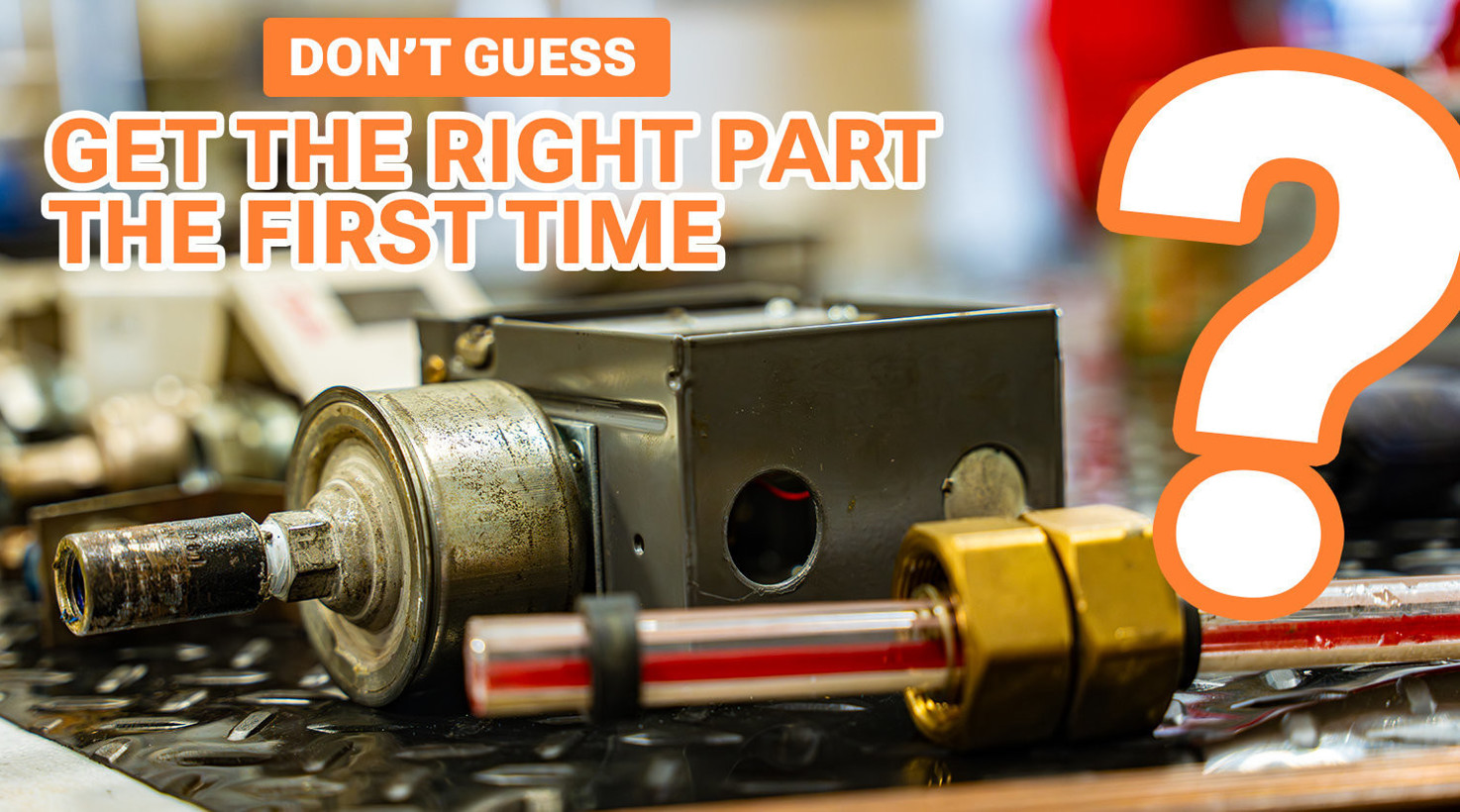
The thing about boiler parts is, a lot of them look pretty similar. But they aren’t. Just because a part appears to be the same as the one you’re replacing doesn’t mean it is. For instance, many pressure control components may look extremely similar on the outside, but that doesn’t mean they’re interchangeable. There may be differences in their pressure ratings. They may not be rated to handle the same temperatures. Some may be rated for hot water only, and some may be steam-rated.
Gas valves and actuators can also be easily misidentified and replaced with the wrong part because so many of them look alike. But some valves can be rated for higher fuel flow than others. Some valves may not be rated for natural gas or propane. Pressure ratings may be different, as well. And just because an actuator fits doesn’t mean it uses the same voltage or the same actuation method.
Another crucial place to avoid taking chances is with your gaskets. Just because a gasket fits in your housing doesn’t mean it’ll work there. Gaskets come in all sorts of sizes and thicknesses, and are made of a wide range of materials. Each one is made a specific way, so it can be rated for a specific application, temperature, and pressure. Get it wrong, and you’ll pay the price.
What’s particularly insidious about using the wrong gasket is that it may seem to be the right replacement at first. Once you put in a new gasket, your boiler may run fine, and your pipe or valve may appear to be leak-free. But if that gasket isn’t rated for the temperature or pressure to which you’re subjecting it, or if it’s made of the wrong material for the application, it could fail without warning. Suddenly your problems have multiplied. What started as a small leak is now a full-blown geyser of hot water or steam. And nobody wants that.
- Use the right replacement part
- Don’t go by appearance alone
- Always check your temperature, pressure, fuel, and material specifications
- Don’t assume something will work just because it fits
CHOICES HAVE CONSEQUENCES
If you swap in the wrong part, the least that could happen is that you’ll hamper your efficiency. But it can get a lot worse. Swapping in the wrong component could lead to catastrophic failure that can destroy or damage your boiler, or cause injury to anyone in the area when it fails. That’s why it’s important to make sure you’re getting an exact match when swapping out any part. Here are some important things to remember:
CHECK THE PART NUMBER
This is the most important point of reference to check. Part numbers are there to make sure that any component is uniquely identified, so it can be replaced with an identical match. Always check your documentation, or if the part is large enough to have a part number on it, check that. Make sure the part you’re installing has the same part number as the one you’re taking out.
Sometimes, parts are upgraded or replaced with newer models. If that’s the case, you may not have an exact part number to match up. When that happens, make sure you’re replacing it with a carefully cross-referenced part that’s designed to be a replacement. Don’t take chances; always consult a parts expert to make sure you’re working with compatible components.
CHECK THE SPECS
Even if the part number matches on the replacement part, it’s always smart to double-check the specifications and ratings just as a failsafe. Make sure the part you’re installing has the same ratings for pressure, temperature, voltage, and any other parameter that will affect its performance. It may seem excessive, but it’s better to be too careful than not careful enough.
- Make sure your part numbers match
- If a part is no longer available, confirm that the replacement you’ve chosen is a compatible replacement
- Make sure the replacement part is rated for the same specifications as the original
- Trust the experts
ALWAYS TRUST THE EXPERTS
If there’s any doubt in your mind whether your replacement part is the right one, don’t hope for the best. Ask an expert for confirmation. Remember, WARE’s BoilerWAREhouse.com not only has the largest selection of boiler parts and supplies in the country, it’s also staffed by real boiler experts with decades of field experience. They’ll know what works and what doesn’t, and they’re always happy to help you get the exact part you need. They’ll even ship it to you fast, in as little as one day for most of the country.
In addition to any part or supply you could ever need (and smart boiler experts to help you), you’ll find another cool thing at Boilerwarehouse.com: The ability to store part information on your account. That means that once you’ve created an account with us, you can store a record of all the replacement parts and supplies you’ve ever used, and easily reorder them with just a few clicks. So you’ll always get a part that you know works.
If you have any questions about a replacement part, component, consumable, or supply, remember that the experts at WARE’s BoilerWAREhouse are standing by to help. We’ll get you what you need, and we’ll get it on the way to you right away. Of course, if you need any help diagnosing a problem or replacing a failing component, the experts at WARE are also standing by to help you with fast, professional service and the best-trained techs around. Whatever you need, just let us know.
FAQs
Q: What is the most common mistake when ordering boiler replacement parts?
A: One of the biggest mistakes is assuming a part is correct because it looks the same. Many components have different pressure, temperature, voltage, or fuel ratings, making exact identification critical.
Q: Why should I use a boiler part number instead of a description?
A: Part numbers uniquely identify a component and help ensure you receive an exact replacement. Descriptions alone can be misleading because many boiler parts look nearly identical while having different specifications.
Q: Can I replace a boiler part with a similar-looking component?
A: Not always. Two parts may appear identical but have different operating pressures, temperatures, voltage requirements, or fuel compatibility. Using the wrong component can reduce efficiency or even create unsafe operating conditions.
Q: What information should I have before ordering a boiler part?
A: Whenever possible, have the original part number, boiler manufacturer, model number, serial number, and the operating specifications of the component you're replacing. This helps ensure you receive the correct part the first time.
Q: What happens if I wait too long to replace a failing boiler component?
A: A small failure can quickly become a much larger repair if surrounding components are damaged. Replacing worn parts early often reduces both downtime and overall repair costs.
Q: Can BoilerWAREhouse help me identify the correct replacement part?
A: Yes. BoilerWAREhouse is staffed by experienced boiler professionals who can help identify compatible replacement parts and cross-reference obsolete components to help minimize downtime.
Q: Does BoilerWAREhouse save my previous orders?
A: Yes. By creating an account, you can store your purchase history and quickly reorder parts you've used before, helping simplify future maintenance and repairs.
Q: Is it better to ask an expert before ordering a boiler part?
A: Absolutely. A quick conversation with an experienced boiler parts specialist can prevent costly ordering mistakes and help ensure your repair goes smoothly the first time.