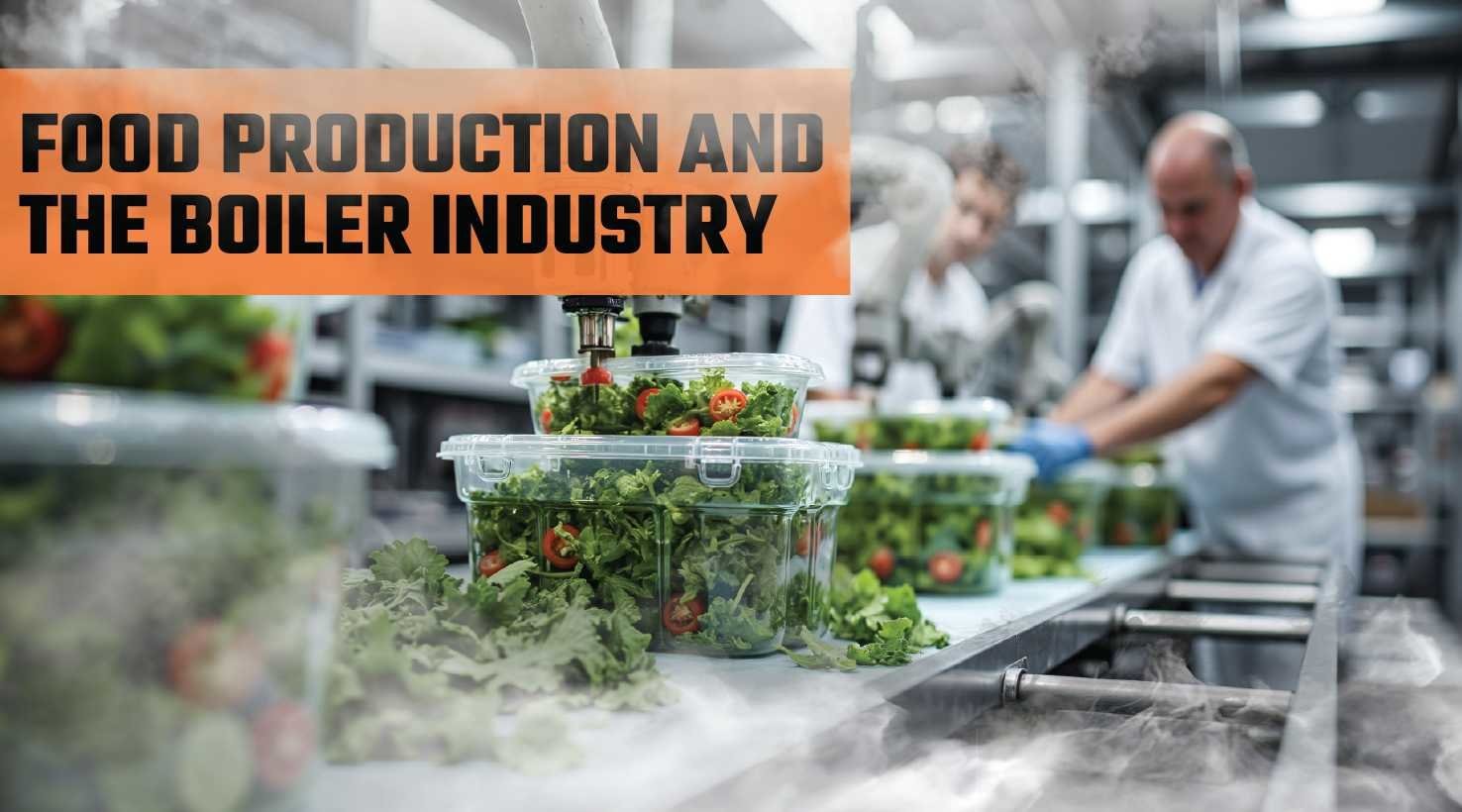
You’ve heard us say this before many times: Steam touches over 80% of the goods you purchase and use every day. But what you may not know is, steam is also involved in over 80% of the things you eat, as well. America’s farmers may put the food on the table, but steam helps it along the way, in a whole bunch of ways.
STEAM CLEANED FOR YOUR PROTECTION
One of the most prominent uses of steam in the food industry is sterilization and cleaning. There are several reasons for this, most of which center around the fact that heat is the most efficient way to kill bacteria and truly sterilize something.
Steam transfers heat extremely efficiently, meaning food manufacturers get more useful heat applied to their machinery and packaging when they blast it with steam. That saves them energy dollars, which ultimately contributes to lower food costs.
Steam provides uniform temperatures. Heat requirements vary from product to product, but whatever the temperature required, it’s easy to heat steam to that temperature and keep it there consistently and evenly.
Steam is easy to contain and control. It can be aimed with nozzles or hoses and easily turned on and off with valves, so it goes exactly where it needs to go without bleeding out into other areas of the production facility.
Steam is easy to distribute because it flows through pipes. That means your boiler doesn’t have to take up valuable production floor space. You can keep it in the basement or in another location, and simply route the steam where it needs to go.
But perhaps the most important reason steam is used for cleaning and sterilization is because it doesn’t leave nasty chemical residue behind. It does its job, destroys the germs, and leaves behind either nothing (because it’s evaporated) or leaves behind a little condensation. No toxic substances. No films or coatings that need to be wiped away. Just the natural water that we all need to stay alive.
STEAM: IT SURE CAN
Another prominent place you’ll find steam in food production is in the canning industry. In fact, you’ll find it all throughout the factories that turn out your favorite canned goods. Especially vegetables. In a typical vegetable canning facility:
- Steam sterilizes the cans before they’re filled and sealed.
- Steam heats the wash water that’s used to rinse vegetables before cooking.
- Steam is used to blanch (partially cook) the vegetables before they are dispensed into cans.
- Steam removes excess air from the cans, helping the vegetables last longer on the shelf.
- Once the cans are sealed, steam is used in the final sterilization process before the cans are cooled and packaged.
UNDER PRESSURE
Another prominent use for steam has to do with the pressure under which it operates. And this is a big one: It prevents botulism, a highly poisonous and often fatal disease that is often transferred by food. See, the thing about the bacteria that causes botulism (Clostridium botulinum) is that it’s a pretty hardy little bugger. It can easily survive in boiling water, which means getting rid of it requires not only higher temperatures, but higher pressures as well. By sterilizing packaging and equipment (and the food itself) with steam under pressure, there’s enough heat and pressure to kill off the Clostridium botulinum and prevent botulism.
Incidentally, this combination of heat and pressure also helps kill off other potentially harmful microbes before they get to your table, including yeasts and molds.
STEAM IN THE FREEZER
Steam is also highly useful in the production of frozen foods, especially vegetables. Not only does it clean the packaging and processing equipment, it also helps frozen foods taste fresher. That’s because steam stops natural enzymes in the food that would otherwise cause it to lose flavor, color, and texture. So the next time you open a package of frozen green beans and they’re actually green, you can bet steam was involved.
It’s not just about flavor, color, and texture, either. By breaking down those enzymes, steam helps keep the nutrients intact. So you can get all the vitamins and minerals from your broccoli, even if you don’t want to eat it. Go on, it’s good for you.
Beyond the vegetable realm, steam is also used in a lot of frozen entrees, such as frozen lasagna. Even though you have to bake it before you eat it, the ingredients themselves are still partially cooked by steam to save you cooking time. Some frozen meals are even fully steam-cooked before you put them in the oven or microwave, so the next time you have a frozen dinner ready in minutes instead of hours, you can thank steam that it’s time to eat.
Incidentally, steam is also used in a lot of heat-sealing processes, such as those used for bagged frozen vegetables or potatoes. So because of steam,
- Your food is clean
- Your food is safer to eat
- Your food tastes better
- Your food looks better
- Your food has more nutrients
- Your food doesn’t take as long to cook
- Your food is safely packaged
A BIG OLD SCOOP OF STEAM
The next time you enjoy something from the ice cream or dairy aisle, you can thank steam that you’ll be able to enjoy it. That’s because those foods are pasteurized. Pasteurization (named for Louis Pasteur, the man who discovered it) involves heating dairy products just hot enough to kill off the bacteria in them that would make humans sick. By killing off this bacteria, dairy products are not only safer to consume, they also have a much longer shelf life.
It’s not just the dairy industry that uses pasteurization, either. It’s also used in the production of:
- Fruit juices
- Wine
- Beer
- Vegetable juices
- Hard cider
- Cold-brew coffee
- Canned coffee beverages
- Bottled teas
- Energy drinks
- Juice boxes
- Protein shakes
- Nutritional supplement beverages
STEAM SAUCE
If you’re eating a canned or frozen entrée or meal that contains some sort of sauce or gravy, it’s highly likely that steam was involved in making it. That’s because steam’s even, steady, easily controlled temperature allows those sauces and gravies to be made in large quantities using steam-heated kettles. Those large kettles not only keep the taste consistent, they also help lower overall manufacturing costs by producing in bulk.
If you use steam for food production, manufacturing, heating, or any other reason, always know that WARE is here to help you keep doing what you do. We have experts standing by to keep your boilers running at peak efficiency and keep them maintained and repaired so you don’t have to deal with costly downtime. If you need parts or supplies, we also offer BoilerWAREhouse, the largest and most comprehensive online boiler supply site in the country, with shipping as fast as 1 day to most of the country. No matter what you need, we’re always here to help.