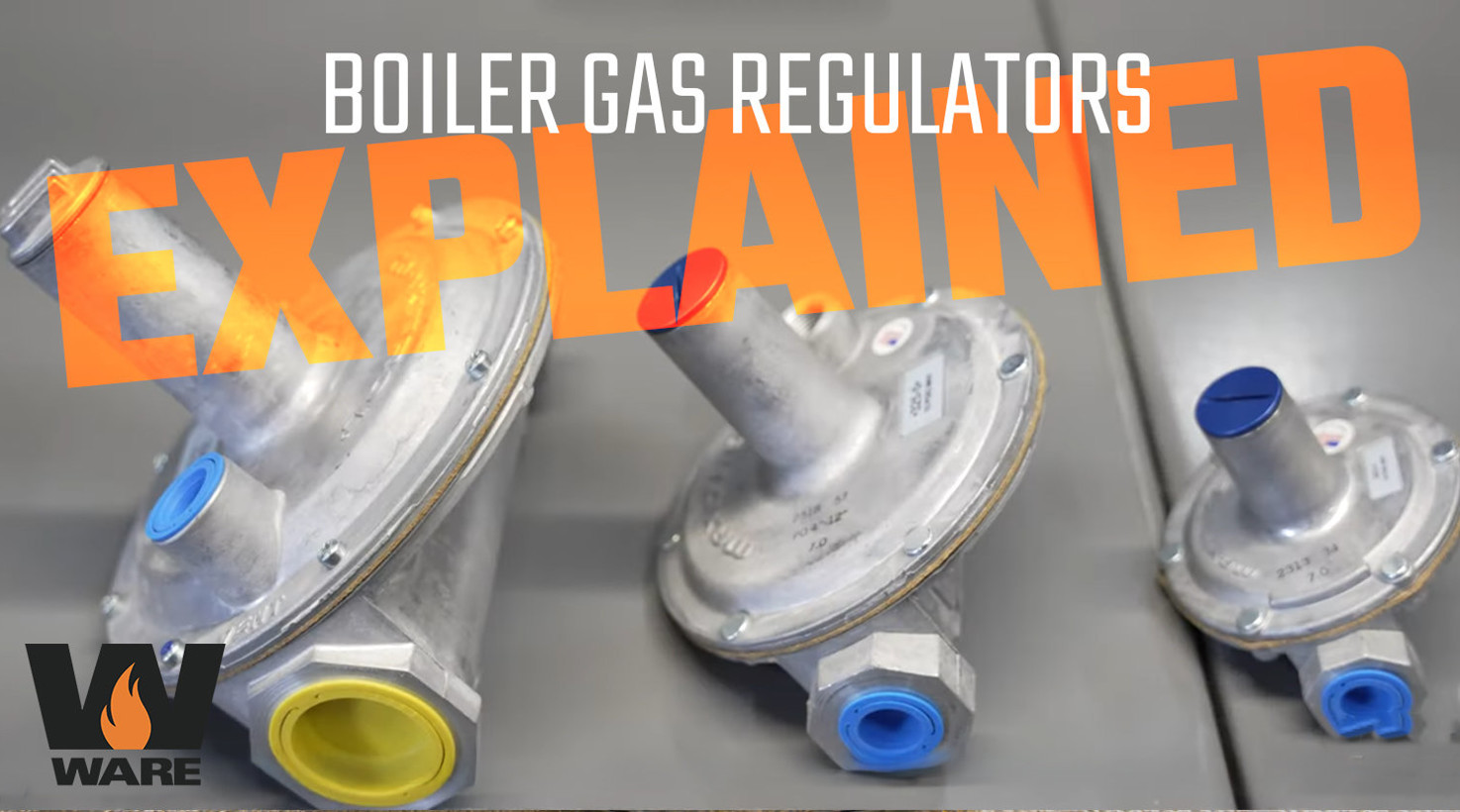
Every boiler needs a steady, even supply of fuel to do its job properly and efficiently. If your boiler runs on natural gas or propane, that means you’ll need a gas regulator to help keep the fuel supplied at the rate and pressure your boiler needs.
WHAT IS A GAS REGULATOR
A gas regulator is a device that controls the flow and pressure downstream to ensure safe and stable operation of fuel burning equipment. Burners and gas trains are specifically designed for a certain flow and pressure for optimal combustion. By keeping the output constant, it allows your boiler to run at a steady, even rate within limits of the burner design parameters. Burners are tuned for optimal combustion based on the ratio of fuel to air. It’s important to have that ratio be steady and repeatable during changes in burner firing rates for efficiency and safety.
Properly sized gas regulators help the following:
- Provide stable service for equipment when upstream demands can cause fluctuations in pressure
- Minimize soot and carbon monoxide production by ensuring consistent flow within burner commissioned limits
- Minimize nuisance alarms. If the pressure drops too low or goes too high, it can trip low-gas or high-gas pressure switches which will shut down the burner at inopportune times
HOW DOES A GAS REGULATOR OPERATE
A gas regulator operates by using a diaphragm connected to a valve that is connected to a spring that keeps the valve open under tension. As the incoming gas flows through the gas regulator, it presses against the valve. If there is too much incoming pressure, the valve will close enough to make sure only the required pressure and volume of gas flow through. The gas leaving the regulator presses against a diaphragm that is also connected to the valve, allowing the gas regulator to continually find the right balance between pressure against the valve and pressure against the diaphragm. When they are in equilibrium, the gas regulator allows gas to flow through at the proper pressure.
- If there is too much pressure, the diaphragm will close the valve to compensate
- If there is too little pressure, the spring will push the valve open to let more gas through
In applications that have a much higher gas demand and volume, the gas regulator may use a “pilot regulator", which is a small gas regulator located downstream of the main regulator. As it senses the pressure coming out of the main gas regulator, the pilot regulator can make adjustments to the amount of gas that is flowing into the main regulator.
Compared to a standard spring-regulated gas regulator, a pilot-regulated gas regulator offers:
- Higher fuel capacity
- Tighter pressure control
- Faster response to changes in boiler demand or line pressure
- Better combustion stability
GAS REGULATOR INSTALLATION
When installing a gas regulator, it’s crucial to remember a few important things:
- Size the regulator properly for the application. Regulators are selected based on the different flow rate, pressure, and turn down requirements of equipment they will be servicing
- Before installation, the lines must be purged of any debris or welding slag before installing the regulator and turning the gas on; debris and welding slag from installation are one of the leading causes of gas regulator failure
- Install strainers upstream of the regulator to prevent them from being damaged by debris
- Follow the recommended pipe diameter specifications and recommendations for installation of sensing lines where the regulator requires them; changes in pipe sizing or having fittings too close to the inlet or outlet can effect the velocity of the gas in or out of the regulator and affect regulator performance
- It’s not uncommon for pipe sizing to change from the inlet and outlet. When higher incoming pressures are on the inlet side of the regulator, the piping can often be smaller than what the outlet piping will need to be to allow the same flow at a lower pressure without a big pressure loss or velocity change of the gas. Making sure you have the correct pipe sizing from the utility through your valves, regulators, and gas trains is important for burner performance. It is not uncommon for a regulator selection to be of a smaller nominal size than the inlet and outlet piping when talking about bigger boilers and burners
IMPORTANT THINGS TO REMEMBER WITH GAS REGULATORS
In order to keep an existing gas regulator working properly, there are a few things to remember.
• Keep strainers upstream of the gas regulator clean. It will help protect it against debris and prolong its life and reliability
• Many gas regulators have relief valves installed to keep them up to specific codes. Those relief valves should be regularly inspected and maintained according to the recommendations of the relief valve’s manufacturer
• It’s also important to inspect the roof vent of the relief valves to make sure it’s always free of water or debris blockages, and that it is not leaking any gas
If you’re looking for a new gas regulator, WARE’s BoilerWAREhouse.com has a wide selection from the most reliable manufacturers, available for all kinds of boiler applications, most with overnight or 2-day shipping to most of the United States. BoilerWAREhouse.com is also your source for the nation’s largest selection of boiler parts, supplies, and consumables, so you can keep your boiler running at its best. Whatever else you need, from service and maintenance to rental or new boilers, WARE is always here to help.