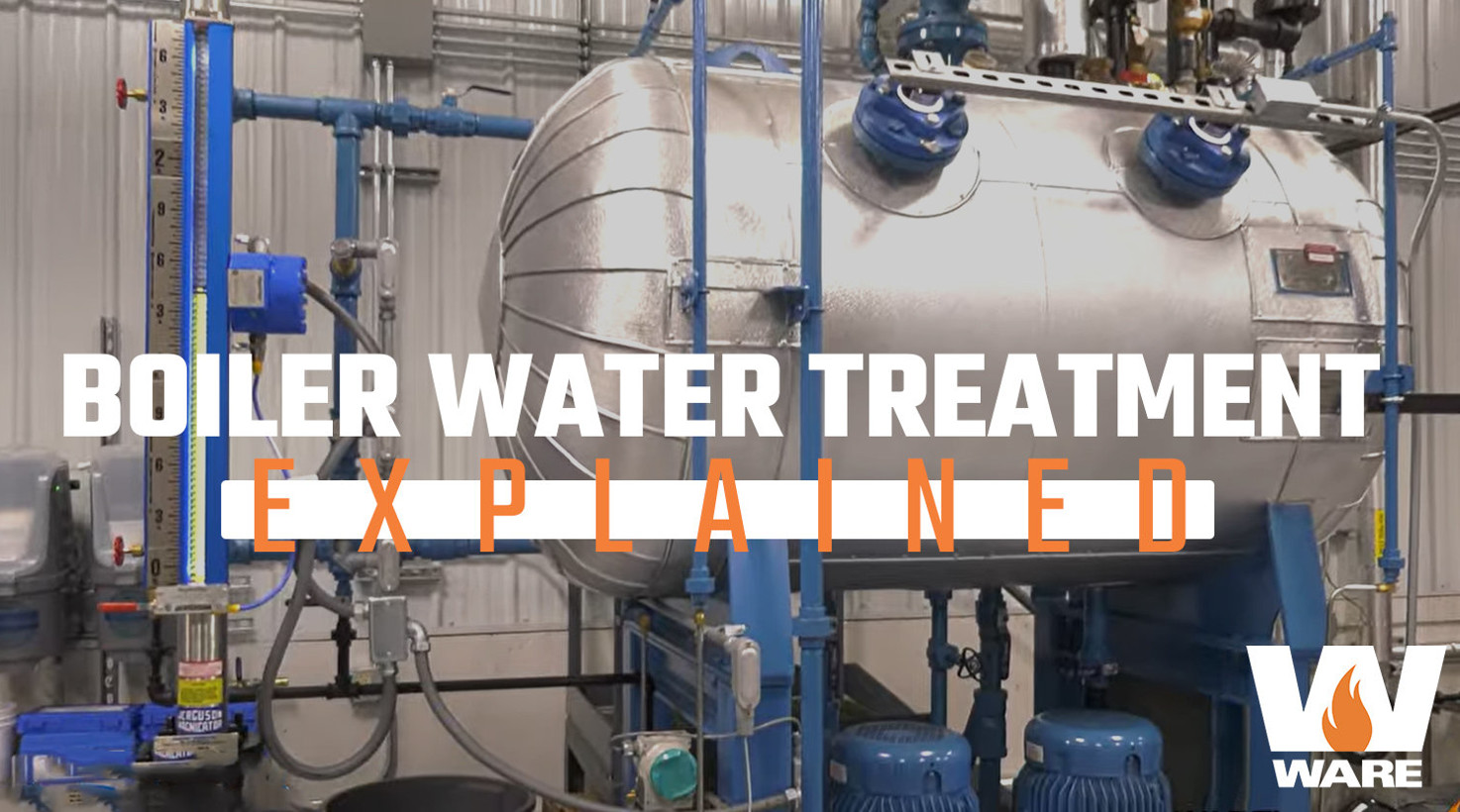
It’s often said that what you get out of something depends on what you put into it. There are few places in the world where that’s more true than inside your boiler. Water quality is one of the most significant factors in your boiler’s efficiency and longevity, for a variety of reasons. Treat it properly, and it’ll treat your boiler kindly. Neglect it, and you’ll end up wasting energy and shortening your boiler’s effective lifespan.
WHAT IS WATER TREATMENT?
Before we discuss its role in your boiler’s performance and lifespan, it’s a good idea to get on the same page about water quality. Water quality refers to the amount of dissolved solids in your water. If you’ve ever heard water referred to as “hard” or “soft”, it’s the same idea.
“Hard” water contains dissolved minerals and solids in higher quantities:
- Calcium
- Magnesium
- Iron
“Soft” water has fewer dissolved minerals and solids.
If you’ve ever taken a shower in hard water, you know it’s hard to get the soap to lather. That’s because all of the dissolved minerals and solids react with the soap’s fatty acids, leaving an insoluble, sticky film on your skin. When you put hard water in your boiler, those dissolved minerals and solids will interact with the surfaces of your boiler, and that’s where the problems start.
SCALE FORMATION
Inside your boiler, the dissolved minerals and solids in hard water will start to attach to the inside of your pipes, and especially your pressure vessel. When they do so, they will eventually bake on and build up a layer of deposits called “scale.”
- Scale acts like insulation, slowing down heat transfer into the pressure vessel.
- Because it needs to burn more fuel to overcome this insulation, your boiler will lose efficiency.
- Even 1/16 of an inch of scale can drop efficiency by up to 12%.
- Not only will you burn more fuel, you’ll subject your pressure vessel walls to higher temperatures, causing heat stress over time.
- Increased heat output from your burners means stack temperatures will increase, as well.
FOAMING AND CARRYOVER
Water with a lot of dissolved solids in it will also cause your boiler to lose efficiency and potentially damage your end work processes.
- Carryover happens when dissolved solids become trapped in the steam in your system, and get transferred to pipes and end work processes where they can cause corrosion and other damage.
- Foaming happens when bubbles or froth occur on the surface of the boiler water, inhibiting the formation of steam.
INCREASED BLOWDOWNS
When your boiler water has a high level of dissolved minerals and solids, blowdowns are required more frequently to purge them from the boiler. Increased blowdowns mean more heated water is lost over time, wasting energy.
THE IMPORTANCE OF OXYGEN REMOVAL
The feedwater you put in your boiler should not only be treated for dissolved minerals and solids, it should also have any excess oxygen removed from it. That’s because excess oxygen will damage your boiler and reduce your overall efficiency.
Oxygen damages boilers by reacting with metal surfaces in the tubes, pumps, and pressure vessel, causing pitting and corrosion that eat away at the metal.
Excess oxygen is removed from water using two methods. The first is the process of deaeration, which releases tiny oxygen bubbles that are in suspension in the water, lowering the overall amount of oxygen in the water
- .Spray-type deaeration aerosolizes the water into tiny droplets, creating more overall surface area that allows the oxygen to escape.
- Tray-type deaeration cascades the water through a series of perforated trays that spread the water into thin sheets as it is exposed to heat, helping to release the oxygen.
The second way that excess oxygen is removed from your boiler’s water is through the use of oxygen scavengers.
- Oxygen scavengers are chemicals added to boiler water that react with excess oxygen, capturing it in harmless byproducts that won’t create pitting or corrosion.
TREATING YOUR WATER
To keep the quality of the water inside your boiler high, there are two important processes that must be used. The first is water softening, accomplished by the use of a water softener.
- During the water softening process, water is exposed to resin beads that are coated in sodium ions.
- The calcium and magnesium ions trade places with the sodium ions, allowing the calcium and magnesium to stick to the beads instead of entering your boiler’s water supply.
The second process involved in improving the quality of your boiler’s water is the addition of chemicals that optimize the water’s performance and help reduce any damage to the boiler itself.
- Alkalinity Builders decrease the acidity of the water, inhibiting corrosion and protecting metal surfaces with a thin oxide layer.
- Scale Inhibitors bind with dissolved solids to form a non-adhesive sludge that can be removed with regular blowdowns.
- Sludge Conditioners keep calcium, iron, and other dissolved solids in suspension, preventing them from setting and forming scale.
- pH Control Chemicals in condensate and feedwater counteract the acidity of carbon dioxide.
- Anti-Foaming Agents prevent boiler water from foaming, helping to preserve efficiency and steam production and reduce carryover.
- De-Alkalizers lower the alkalinity in makeup water, reducing condensate line corrosion.
If you’d like to learn more about the relationship between water quality and your boiler’s performance and life, consider taking a class from WARE’s Boiler University where you’ll learn the ins and outs of proper boiler operation from real industry experts. If you have a question about your water quality, our experienced boiler technicians are standing by help. And if you need replacement chemicals or parts for your boiler, WARE’s BoilerWAREhouse.com is your online resource to find everything boiler-related, with shipping as fast as 1 day. Whatever you need, WARE is here to help.